KNX or wireless? How to choose for your villa
Most owners hit this choice in the middle of a build, and most have never heard of KNX. Faced with something unfamiliar, they either get scared off or do nothing. Neither ends well.
The honest answer comes down to one question: are your walls open or closed?
If the walls are open, KNX usually wins
KNX is a wired standard. One thin green cable connects every light, blind, heater and sensor in the house, so they all work together. In a large villa, that pays off.
- Instant. Wired, so every button responds straight away, every time.
- Not as expensive as you'd think. In a big house with lots of circuits, KNX isn't far off the cost of doing the same with wireless devices.
- Heating and cooling. Heat pumps, underfloor heating and air conditioning plug in far more easily.
- Scale. Dozens of lighting circuits, garden lighting and pool heating, no problem.
- One brain. Everything is programmed in one place, not spread across five apps.
- No dead end. Add any device later, from any KNX brand.
If the walls are closed, go wireless
When the house is finished and new cable can't be run, retrofit devices like Shelly behind your existing switches are the best way to add smart control. We fit them all the time and they're great.
Just be honest about the limits. Every wireless device leans on your WiFi. In a big villa with a hundred devices, that starts to show: things respond slowly, drop out, and stop feeling effortless.
What about doing it yourself?
Plenty of owners read about Home Assistant and decide to build it themselves. It's a brilliant platform, but it's a hobbyist tool, not a finished product. Getting dozens of devices to work together reliably is the hard bit, and it needs real skill and ongoing care.
The rule we use
The more systems and zones a house has, the more KNX pays for itself. The simpler the house, the more sense retrofit makes. We install both, and we'll tell you straight which one fits your home.
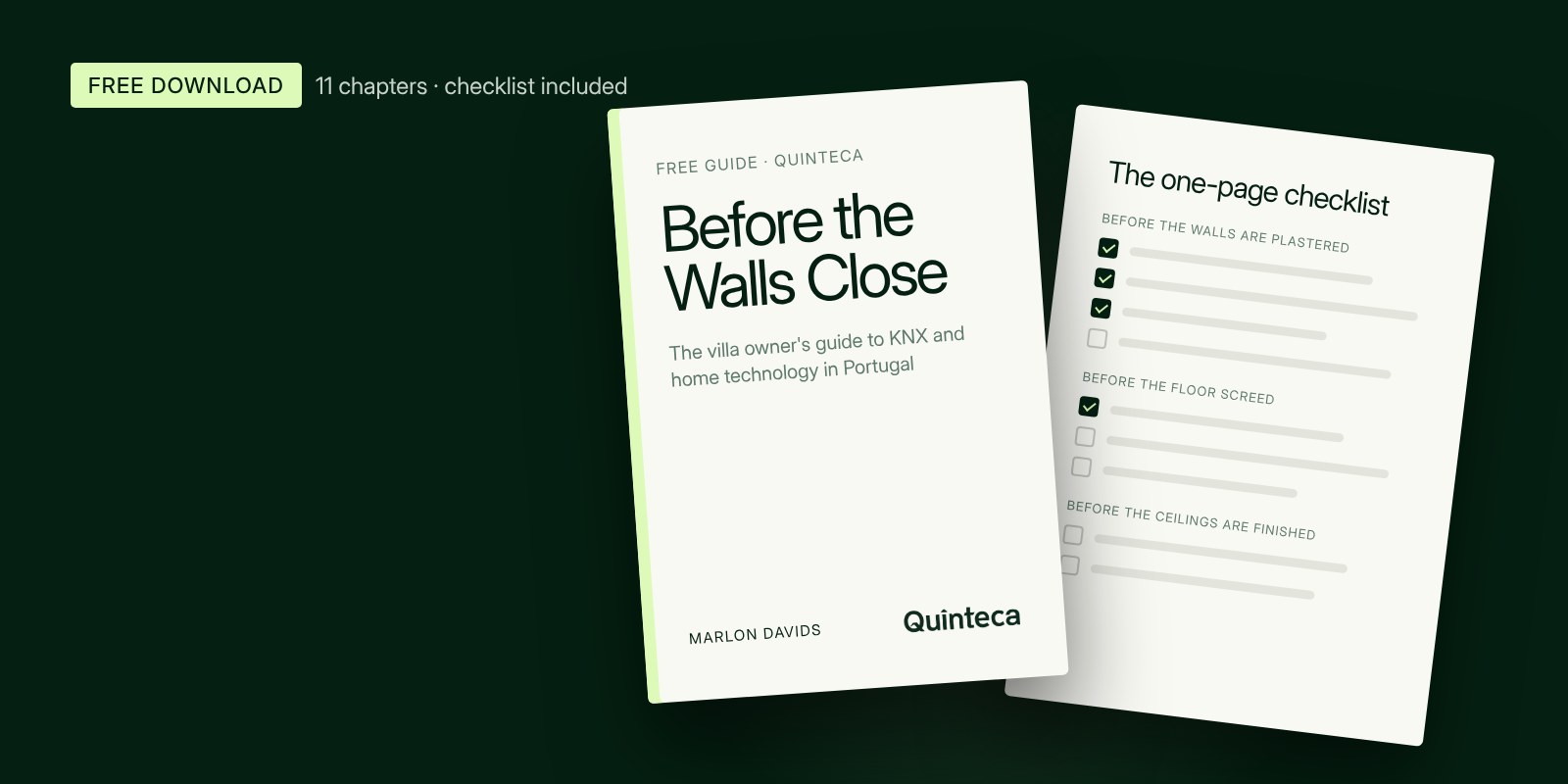
This is one chapter from our free guide, Before the Walls Close. The full guide covers what to tell your architect, lighting, heating, keypads, costs and a one-page checklist for your builder.